
Heavy and Oversized Transport in Germany: GRUBER Logistics in Spiegel Magazine
The deteriorating state of German infrastructure is not only damaging to Germany’s economy. As a transit country, Germany plays a pivotal role in the flow of goods across Europe. GRUBER Logistics also faces this situation on a daily basis, which is particularly challenging for heavy and oversized transport.
To illustrate the current state of German infrastructure, the magazine Der Spiegel published a report covering the daily work of two professional GRUBER Logistics drivers, Uwe Schramm and René Wobst.
Although the condition of the infrastructure is a regular source of concern for both, public perception of professional drivers has also changed in recent years. “They used to be more appreciated,” states René Wobst in the Der Spiegel report.
Indeed, there is a link between the reputation of professional drivers and the state of infrastructure. When a motorway bridge is closed to traffic or roadworks are not completed on schedule, trucks are forced to take detours through neighbouring towns and villages.
This increasingly creates a negative perception among the local population. Drivers, through no fault of their own, often end up bearing the brunt of it.
Holger Dechant, Managing Director Unit Heavy & Special Transport Germany, reaches a conclusion regarding the expansion of German road, rail, and waterway infrastructure: “We’ve missed the boat, folks.”

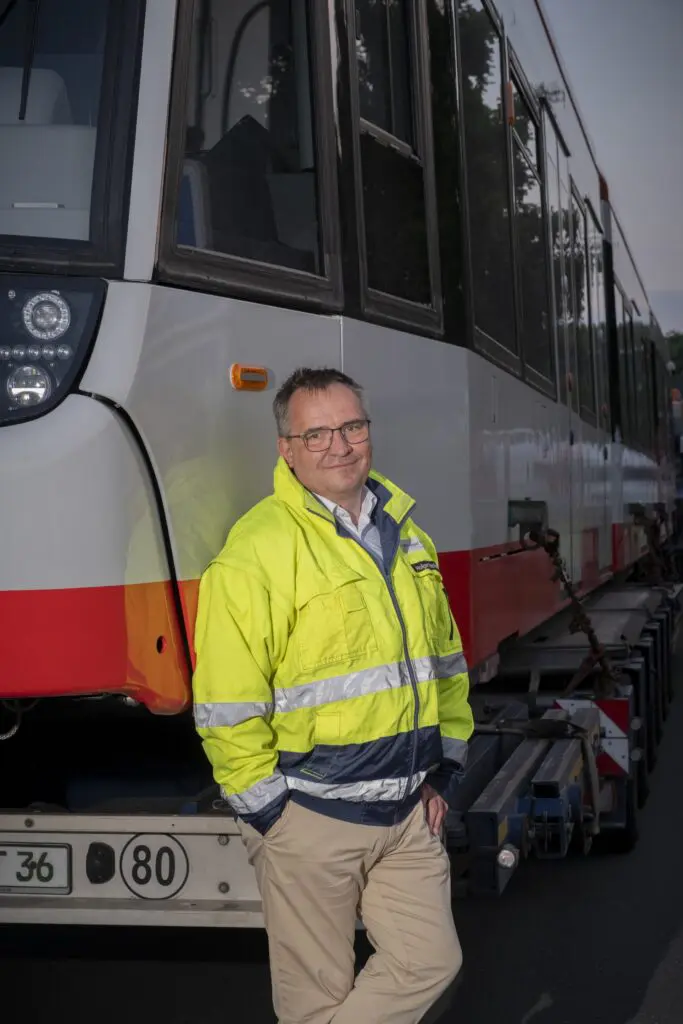
Crumbling motorways, limited rail capacity, and a lack of investment in inland waterway development turn every heavy and oversized transport operation into a logistical challenge.
Furthermore, road transport requires separate permits in each individual German federal state. GRUBER Logistics routinely handles obtaining these permits, but the procedures cause delays throughout the entire logistics process.
However, GRUBER Logistics does not simply stand by; it maintains continuous dialogue with Autobahn GmbH to draw attention to current issues and collaborate on finding solutions. These challenges can only be overcome through cooperation.
Unlike road transport, in several federal states the aforementioned permits are no longer required for rail and inland waterway transport.
For this reason, Dechant emphasizes: “We are logistics specialists! In addition to road haulage, we also examine whether cargo can be transported by barge or rail.”
Rail transport, in particular, offers the advantage of reducing CO₂ emissions in heavy and oversized freight transport. According to Dechant, however, it remains to be seen whether customers are willing to bear the associated costs.
Despite infrastructural challenges, GRUBER Logistics continues to guarantee high standards of punctuality and logistical efficiency. A concrete example is the Italy-Germany Groupage service, which ensures reliable daily connections with major German industrial regions.
To learn more about the topic, you can read the full report by Der Spiegel here on Spiegel online.
GRUBER Logistics welcomes the attention paid by Der Spiegel to the state of German infrastructure through the story of the daily routine of its two professional drivers.
The hope is that the report will foster a better understanding of the essential role of professional drivers and accelerate the investments needed to upgrade infrastructure.