
Logistica Management Interview with Marcello Corazzola
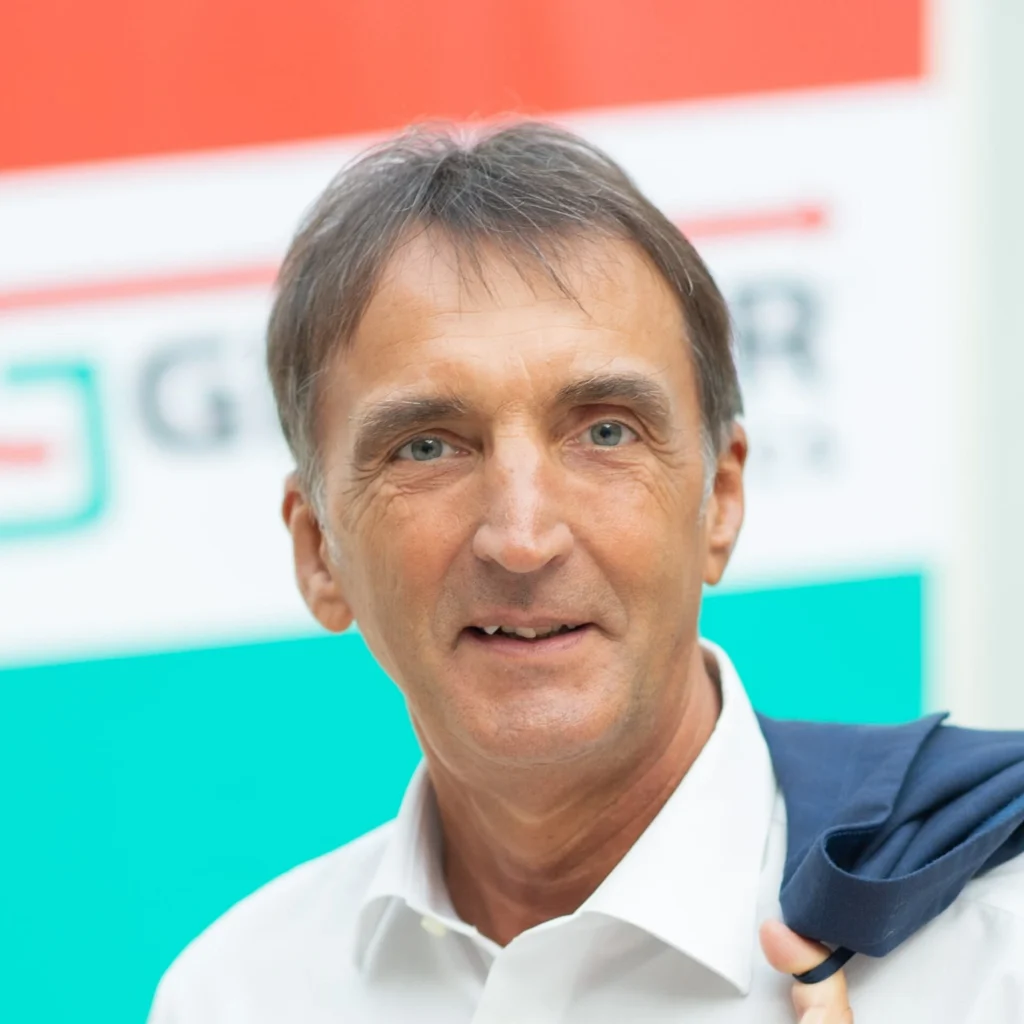
The magazine “Logistica Management” interviewed our Managing Director and Board Member Marcello Corazzola.
Scenario
Raw material shortages, rising costs, global supply chain disruptions—in short, everything that has occurred in Italy and worldwide between the post-Covid era and the Russian invasion of Ukraine… You had to address numerous challenges in 2022. How was this possible? Is this nonetheless the standard mission of logistics, using the organizational and technological tools traditionally deployed to manage the unexpected, or was it an extraordinary year that required extraordinary actions?
And for 2023, what are your forecasts and what are you preparing for?
We often hear that we are still in a “crisis” or that “the worst of the crisis is yet to come.” This is a word we have eliminated from our company vocabulary. This decision stems from the awareness that we have entered a new market dimension with zero predictability in geopolitical dynamics, which, in an interdependent economy, trigger radical changes overnight. Believing that this is a “crisis” would lead us to think it will pass and that we can do nothing to address it. Yet, even though much of what we experience as a company is exogenous in nature, the proactive steps companies can take—and that we were among the first to implement—are countless. The first step for us was to clearly define the position we want to hold in the logistics market. We are increasingly shifting from a pure commodity mindset toward high-value logistics, where technical, operational, sustainable, and digital solutions are central to our offering. Furthermore, the balance between competitiveness and cooperation is becoming increasingly decisive. We cannot tackle the challenges of the future alone. We have therefore acquired leading companies in Germany, such as Universal Transport and Züst & Bachmeier Project, and expanded our partner network. In LTL and Groupage, for instance, our European warehouse network for freight consolidation and deconsolidation has grown from 350 distribution and/or delivery points to over 700.
Sustainability and Decarbonization
Environmental sustainability is an increasingly urgent priority, but it can also be a divisive topic. We see this, for example, when discussing powertrains: between proponents of innovative solutions, such as electric or hydrogen, and the advocates of the internal combustion engine—even when powered by non-fossil fuels—as the sole foundation for a gradual ecological transition. What we would like to ask, then, is what your approach to environmental sustainability is. Do you pursue sustainability goals “at all costs” with a long-term horizon, or do you believe it is better to adopt a phased approach that takes into account the demands of today alongside those of tomorrow? In either case, what concrete projects and initiatives have you put in place? What, in general, is your vision of sustainability?
Uncertainty leads to stagnation only for those who are not accustomed to change and innovation. Take the issue of alternative fuels as an example. We can find critical issues with any solution currently on the market or on the horizon. For many, this means not moving at all. At GRUBER Logistics, we take a radically different approach. Last year, we deployed our first electric truck for distribution. We regularly use alternative fuels such as LNG, Bio-LNG, and Biodiesel. We actively participate in international research projects on electric and hydrogen vehicles and work closely with the European Commission to define EU policies on this topic. Too many costs and too many risks for Italian SMEs? While tackling these issues can be challenging, we must always consider our ability to optimize loads and distribution networks. Considering that the most frequently transported cargo in Europe is air and that companies run many empty kilometers every day, it is clear that we can reduce the environmental impact of our supply chains simply by optimizing our processes. The environmental challenge is not a match we can choose not to play. If we don’t, we will definitely lose.
The human factor: blue-collar or manager?
What is the impact of technological development on the human factor? Is it an enabling asset that enhances personal skills, leading staff to perform operational tasks with an increasingly managerial mindset? Or does it, on the contrary, devalue their roles? Given the current recruitment challenges, which profiles do you focus on most: pawns or strategists?
The issue is not which job profiles to target, but seeking skills and enabling people within the company to grow and improve. GRUBER Logistics has maintained a growth rate of around 28.5% over the past two years. This is a truly significant growth, largely driven by the involvement of our people and new talents in this development process. An example is the approach we chose for contract logistics and LTL in Italy through direct hiring. We believe that only the direct management of our people allows us to implement technological upgrades faster, improve service quality, and optimize our data reading and analysis capabilities.
This market approach is undeniably focused on delivering high value-added logistics that are socially sustainable. In Italy alone, our Contract Logistics Business Unit saw an increase of 120 employees last year. This is a crucial step toward implementing organizational engineering methodologies designed to create value-added logistics centered on solutions, IT developments, new technology deployment, and innovation. We stand in stark contrast to low-cost logistics, which has driven many companies in our industry to cut costs at the expense of indirect labor. Our appeal as an employer is absolutely central. At the end of 2020, we celebrated 1,000 employees. Today, taking into account recent acquisitions, we are over 2,200. In terms of employer branding and appeal, I would say we are second to none.
To read the article published by the trade association FIAP, click here: Italian Logistics Survey | FIAP Autotrasporti