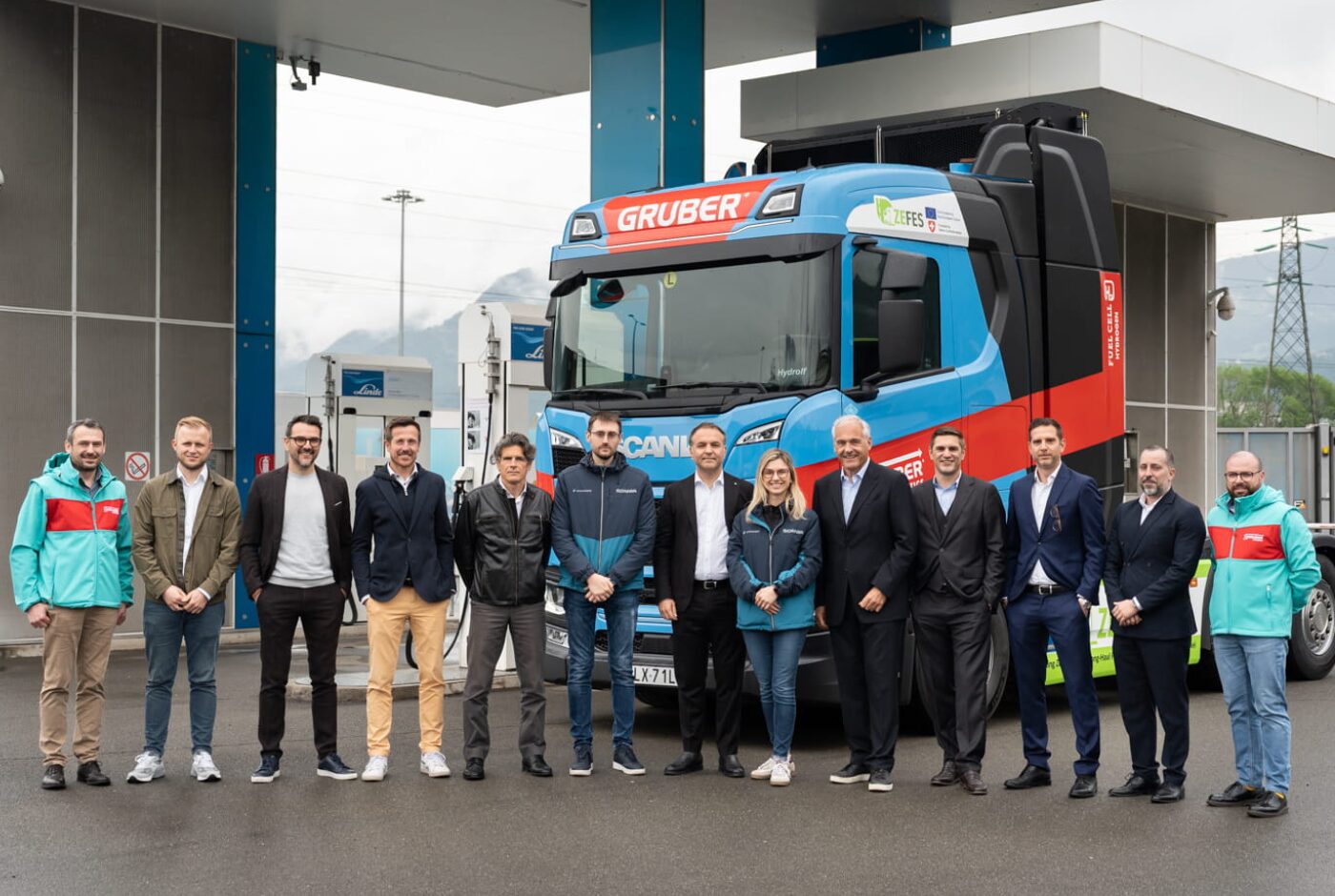

The partnership between Gruber and Scania is part of the European ZEFES project and represents the first trial in Italy of a hydrogen-powered heavy vehicle. Scania focuses on electrification but is continuously committed to gaining a deep understanding of all forms of sustainable transport.
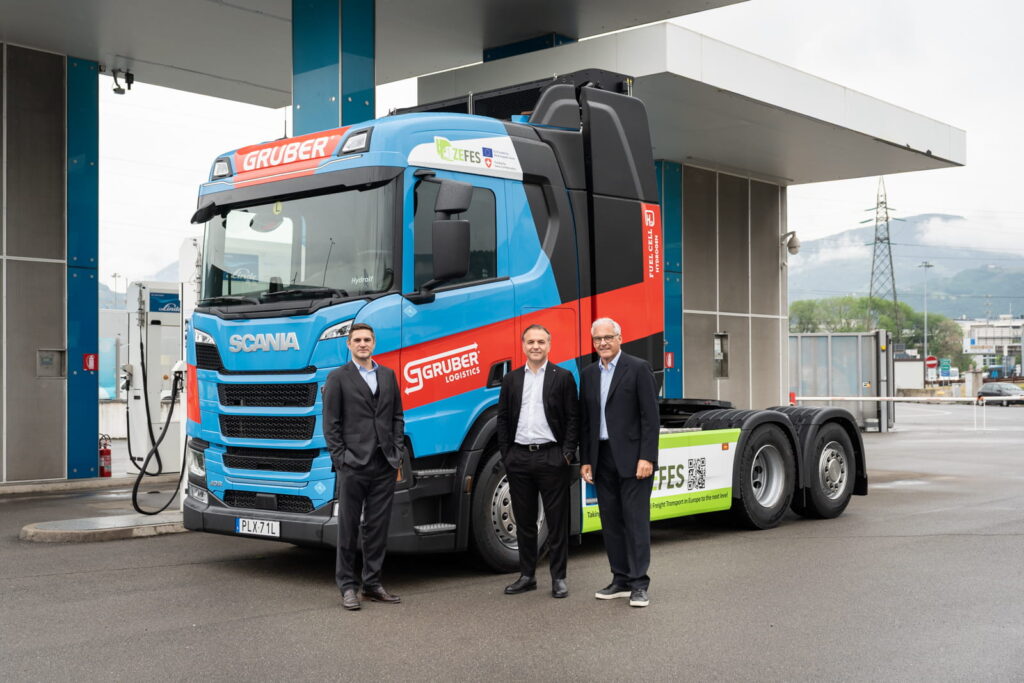
Evaluations of hydrogen-powered heavy vehicles are still in an early phase and are currently mainly concentrated in pilot projects at the European level. In this context, the collaboration between Gruber Logistics and Scania helps position Italy among the countries at the forefront of developing and testing hydrogen solutions for heavy transport. Starting in May 2026, a Scania 40 R equipped with fuel cell technology will enter a real-world testing phase together with the South Tyrolean logistics operator.
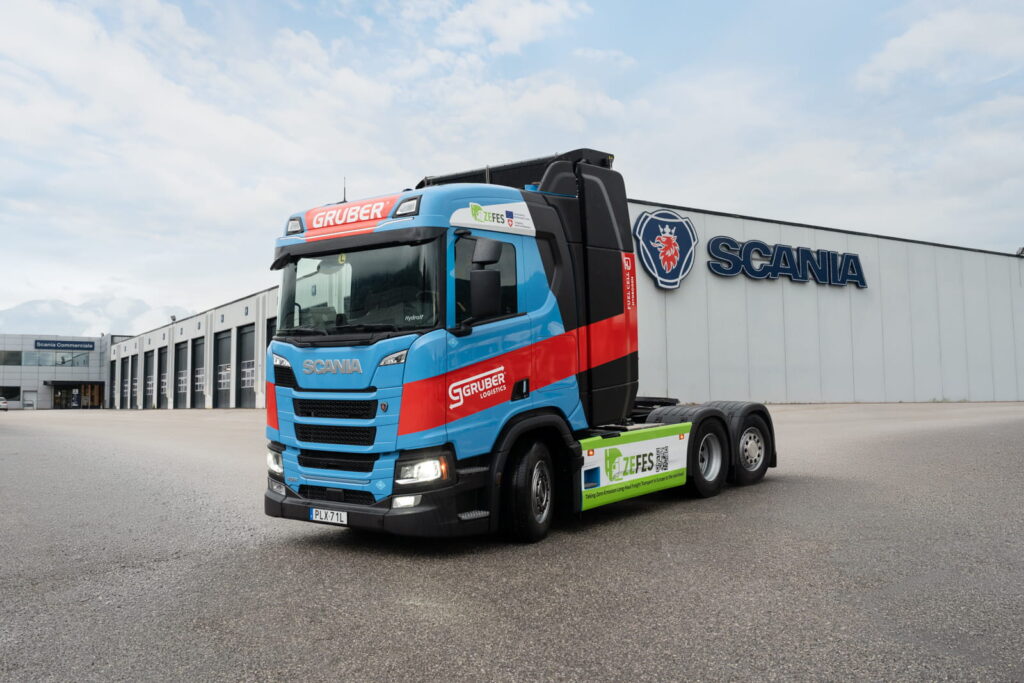 The initiative is part of the European ZEFES project, which aims to accelerate the decarbonization of freight transport in Europe through real-world road testing of battery-electric (BEV) and hydrogen-powered (FCEV) heavy vehicles.
“It is important to emphasize that even this vehicle is still not in production, it will be used for real operations by Gruber Logistics. Thanks to the collaboration with leaders of the industry such as Nestle, P&G, Verallia Italy, ABB and Birra Forst we can carry commercial loads in a real-world application. This is a critical step to accelerate the deployment of new technology and to understand what are the potential difficulties that a logistics operator must face through their use”, says Martin Gruber, CEO of Gruber Logistics.
This trial is part of Scania’s broader Pilot Partner strategy of testing technologies and architectures in collaboration with selected customers to build practical knowledge useful for the transition to low- or zero-emission transport.
The FCEV vehicle: a BEV tractor with H₂ tanks for greater range
Thanks to its modular approach, the three-axle tractor unit is based on a BEV platform onto which hydrogen tanks and a fuel cell system have been integrated. It should be noted that hydrogen is not burned: it is used as an energy carrier and converted into electricity via a fuel cell. The goal is to evaluate operational performance, range, and refueling methods under real-world conditions.
Compared to a “pure” BEV, a Fuel Cell Electric Vehicle (FCEV) presents several advantages and considerations:
- Greater range: the fuel cell system generally enables longer distances compared to BEV configurations with similar battery packs;
- Short refueling times: hydrogen refueling can be completed in 20 minutes, much faster than rapid battery charging times;
- Infrastructure and energy distribution: hydrogen distribution and refueling networks can be easier to decentralize and manage for certain logistics operations, making them more suitable for complex and decentralized applications.
“By leveraging Scania’s typical modular approach, we used the BEV platform and integrated it with fuel cell technology. This is not a vehicle optimized in its final configuration, but a transitional solution that allows us to capitalize on developments in the electric powertrain and to evaluate the behavior of the fuel cell system under real conditions. The next step will be to optimize the layout to reduce space requirements and the battery packs, which are currently oversized,” says Simone Martinelli, Sales Manager E-mobility, Urban & Construction Sales Scania Italy.
Scania 40R FCEV – Technical Specifications
| Scania 40R FCEV | |
| Range | Up to 1.000 km (690 km with H2 + 310 km on battery) |
| Battery capacity | 416 kWh (installed) 345 kWh (unsable) |
| Charging | CCS2 500 A (350 kW) |
| Hydrogen capacity | 56 kg (4 tanks) at 700 bar |
| Refueling time | 20 minutes (700 bar, pre-cooled, high-flow) |
| Fuel cell power | 300 kW |
| Electric motor power | 400 kW |
| Consumption | 0.1 kg/km
1.1 kWh/km |
| Length | vehicle 7.35 m vehicle + trailer 17.4 m |
| Vehicle weight | 13.,8 tons |
| Gross vehicle weight | 44 tons |
| Payload | 23 tons |
In addition to road operations, refueling tests, static and dynamic demonstrations, and participation in trade fairs and technical conferences are planned to share results and best practices with the industry. The first event is scheduled for Transpotec 2026, where Scania and Gruber Logistics will present the initiative during a public session on Thursday, May 14 at 12:00 (Hall 22, Scania stand). Throughout the trade fair, visitors will be able to see the vehicle on static display in the outdoor area.
The vehicle will also be available to visitors at the end of the month during the Gruber Logistics Innovation Summit: on May 27 at the Safety Park in Bolzano and on May 28 at NOI Techpark, also in Bolzano.